Lombardozzi and Peacock Named Minor League Player/Pitcher Of The Year, Who Else Earned Consideration?

Written by William Yoder on .

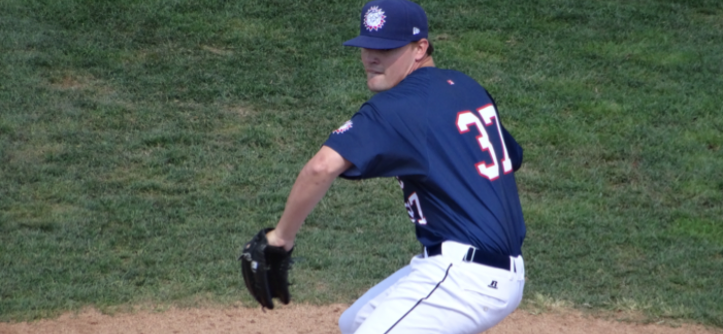
4540366646_a28450f34bThe Washington Nationals have named versatile infielder Steve Lombardozzi the organization’s minor league player of the year and starting pitcher Brad Peacock the organization’s minor league pitcher of the year, according to a team press release.

Both players have been recently called up to join the big league club for the month of September.

In 134 games between Harrisburg and Syracuse, Lobardozzi hit .309/.360/.430 with eight home runs and 30 stolen bases. He also recorded a stellar .997 fielding percentage while playing second base, shortstop, and third base throughout the season.

Peacock posted a 15-3 record with a 2.39 ERA in 23 starts between Harrisburg and Syracuse. The 23-year-old right-hander struck out 177 batters in 146.2 this season. He is set to make his first start of his Major League career next week.

Both youngsters represent major wins for the Nationals’ scouting and development departments. Lombardozzi, 22, was drafted in the 19th round of the MLB Draft in 2008. Peacock, now considered a top level pitching prospect, was selected by the Nats in the 41st round of the 2006 MLB Draft.

There wasn’t much question that these two would win player/pitcher of the year honors, however there were several other players who had stellar overall seasons in the minors this year. Here are a few: 

Tom Milone - 12-6, 3.22 ERA, 155 K in 148.1 IP, 16 BB

Bryce Harper - .297/.392/.501, 17 HR, 58 RBI, 26 SB

Chris Marrero - .300/.375/.449, 14 HR, 69 RBI, 59 R

Archie Gilbert - .313/.383/.484, 12 HR, 31 SB, 23 2B

Danny Rosenbaum - 9-6, 2.52 ERA, 135 K, 52 BB

no comments

TNB's Midseason Top 10 Nationals Prospects

Written by William Yoder on .

Brad-PeacockAs the season reaches its ceremonial halfway point, it’s a good time to take a look at the minor leagues and re-evaluate the team’s prospect situation. At the beginning of the season we often see several lists come out from various publications that rank each team’s top prospects, however we seldom see this list updated halfway through the year.

A lot has changed since March, and it’s important for us to know the state of Washington’s minor league system as it will come into play during the trade deadline as well as the late season call-ups. For this list we have removed players such as Danny Espinosa  and Wilson Ramos who have lost their rookie status. I have also held off on including players who were drafted by the team this June, because while Anthony Rendon is a super prospect, it’s not a done deal until he signs a contract with the team.

1. Bryce Harper - .320/.422/.544, 14 HR, 48 RBI, 20 SB

 Harper has cruised through the minor leagues thus far, easily handling 72 games at low Single-A Hagerstown before recently earning a promotion to Double-A Harrisburg earlier this month. The 18-year-old has shown all five tools in game play so far this season, and according to most scouts, Harper still projects to rate as an 80 in power on a 40-80 scouting scale. The question at this point isn’t if he is the best prospect on the Nationals, but whether he is the best in baseball. Kevin Goldstein of Baseball Prospectus has an interesting comparison to him and fellow top prospect Mike Trout.

2. Brad Peacock – 10-2, 2.01 ERA, 129 SO, 98.2 IP

Peacock snuck in as the Nats 10th best pre-season prospect according to Baseball America, by midseason, the publication had him ranked within the top 50 in all of baseball. The 23-year-old has been simply outstanding at Double-A Harrisburg this season. His 11.8 strikeouts per nine innings is one of the top in the organization, and his just 23 walks mean he’s one of the best pure pitchers in the organization. Few saw this coming last season after he combined to post a 4.50 ERA in 25 MiLB starts in 2010, but with his recent promotion to Triple-A, it’s certainly possible we could see Peacock make his MLB debut in 2011.

3. A.J. Cole - 2-4, 2.87 ERA, 57 K in 47 IP

In 2010 the Nationals gave Cole the highest ever signing bonus for a fourth-round draft pick. That was because they viewed the 6-5, 18-year-old right hander as having first round talent, and from what we’ve seen so far, they were probably right. For a player with less high-level baseball experience than Bryce Harper, Cole has excelled in his first nine starts in Hagerstown. His natural frame as well as his high strike out rate are a good indication that he has what it takes to be a big time talent in this league, it will only take a matter of time.

4. Tom Milone – 7-5, 3.15 ERA, 107 K, 103.0 IP, 15.29 K/BB

A lot of analysts are still low on Milone despite the unbelievable numbers he has posted in Triple-A Syracuse so far this season. Initial knocks on the 24-year-old left hander said that he didn’t strike out enough batters, that he was destine to become a pitcher in the mold of John Lannan. Since then he has improved his strikeout rate dramatically, peaking at 9.3 K/9 this season. Now some question whether he can be as successful at the MLB level because he doesn’t throw very hard consistently. However given his numbers, I’m going to give the lefty the benefit of the doubt. Baseball Prospectus says his comparables are Andy Pettite and Mark Mulder, and if he can improve his fastball by one or two miles per hour, I could see him being a solid No. 3 or No. 4 starting pitcher.

5. Sammy Solis – 4-1, 3.54 ERA, 50 K in 53.1 IP

Solis was the Nationals second round pick behind Bryce Harper last season. The San Diego –left-hander has had a very solid professional debut in 2011. In nine starts between Hagerstown and Potomac, Solis has been effective against both right and left-handers. At 22-years-of-age and with a good deal of college experience under his be,t he is likely still playing under his talent level in high Single-A right now. It will be interesting to see how he does if he earns a late season promotion to Harrisburg this summer.

6. Chris Marrero - .301/.373/.433 9 HR, 46 RBI

Marrero has continued his slow march toward the Major Leagues this season as he has put together another marginally improved season at yet another level. The former first round pick has now played six minor league seasons, and while he has taken no gigantic step in any of them, he has improved gradually in all of them. Now with a .300 batting average in Triple-A, the player the Nats signed as a 17-year-old may be ready to make the Major Leagues at 23. Unfortunately, for a first baseman, Marrero’s .433 slugging percentage will not cut it for any team at the Major League level, and despite many people expecting his power hitting ability to rise of the next few seasons, his development in that area has completely stalled. Right now it seems like he could be a major leaguer, but its hard to see super huge upside.

7. Derek Norris - .197/.360/.426 12 HR, 28 RBI

Norris has long been considered one of the Nationals top prospects. His natural raw power and his great patience have excited scouts across the country, especially when evaluators consider his young age. However injuries have slowed the slugging catcher over the past few years, and the backstop that used to hit in the .270s and .280s has seen his batting average fall below .200 this season. He is still getting on base well, and has hit his fair share of home runs, but without the ability to his for average consistently, Norris could be stuck in Harrisburg for a long time. The good news is he’s still young, but the bad news is his performance is failing to match his potential.

8. Stephen Lombardozzi – .319/.365/.446, 4 HR, 20 SB

Some prospects are made purely on potential, others are made purely on head-scratching performance, Lombardozzi is the latter. The undersized second baseman does not carry much pop in his bat, but his ability to hit for average and get on base at all levels could earn him a big league promotion in the next several years, especially if Ian Desmond does not pan out.

9. Robbie Ray – 2-1, 1.76 ERA, 61K in 61 IP

Ray, like Cole, was drafted by the Nationals and given above slot money to not go to college. In 12 starts so far, it looks like he made the right decision. The left-hander has thrown smoke on the mound and has limited opponents to just a 1.76 ERA in over 60 innings pitched. His strikeout rate has stayed consistent at 9.0 K/9, and he appears ready to take on the next level of competition.

10. Eury Perez - .282/.310/.332, 1 HR, 26 SB

Perez, 21, has seemed to stall in Single-A Potomac. After a promising stint in Hagerstown last year in which he hit .299/.345/.381 with 64 stolen bases, his batting average, on base percentage, and slugging percentage have all dropped. He’s still young, but the Dominican speedster needs to continue to get on base to have any chance as a MLB speedster.

no comments

A Few Words On Our Predicted Pick, Alex Meyer

Written by William Yoder on .

Alex-Meyer-celebrate-200Last month we wrote that several sources indicated that the Nats were really high on Kentucky starter Alex Meyer and that the club wanted to get him with the 23rd pick, but believed he would be off the board. Well as you now know, the best case scenario occured and the club took mega-prospect Anthony Rendon with their first pick, and was still able to snatch Meyer with the 23rd pick.

Also, interestingly, Law says the Nationals might be interested in Goodwin with the 23rd pick...Washington ended up selecting him with their sandwhich pick tonight as well. 

Here is the write up we did about him last month:

---

Both ESPN.com and Baseball America have the Washington Nationals selecting Alex Meyer, a right handed pitcher out of Kentucky, with their sixth overall pick in next months first year player draft. Keith Law of ESPN Insider writes:

"Washington originally thought they'd get Meyer with the 23rd pick, which they got as compensation for Adam Dunn signing with the White Sox, but Meyer has pitched way too well down the stretch for that to happen. If they want Meyer they'd have to take him here. Other names in this spot include Hultzen, Bauer, or Barnes if they get this far, but they wouldn't do Bundy, Sonny Gray, or Taylor Jungmann. I've also heard the Nats on outfielder Brian Goodwin with the 23rd pick."

We heard earlier this week from the Nationals director of amateur scouting Kris Kline that Washington is likely to focus on pitching with their first several picks, and based on the comments above it seems like there is pretty good intelligence that Mike Rizzo and the Nationals scouting department are high on Meyer. There will likely be some surprises in the top ten picks given the great amount of talent in this year’s draft, but unless UVA’s Danny Hultzen or Rice’s Anthony Rendon are available, I think it’s close to a lock at this point that they will go with the hurler from Kentucky.

Meyer has seen his stock skyrocket this spring because he has finally been able to put his incredible stuff to work. He has long been on professional scout’s radar as he throws consistently in the mid 90’s with what has been described as a hard biting slider, but even through his sophomore year, and in the Cape Cod League this summer, he has not been able to harness it into becoming a dominant on the mound presence. For amateur baseball players, though, a few months can make a world of difference. After reporting back to school and working on his command, he has seemingly turned it around. In 13 starts Meyer is 6-5 with a 3.06 ERA, with two shutouts and 101 strikeouts in 94 innings pitched.

Meyer appears to be a potential poor man’s right-handed Randy Johnson. At 6 foot 9 he reportedly throws with an unorthodox low three-quarter delivery in the mid 90’s fastball that scouts say has a lot of movement, making it very tough for right handed hitters to hit. Scouts also say he has a “wipeout slider”. The consensus seems to be that if he can improve to have average control at a Major League level, he could be a number one starter.

We often see control problems in tall pitchers. It can be difficult to get all those limbs to go in all the right places 100-120 times per night. Some pitchers figure it out and have massively successful careers because their late release point makes it difficult for hitters to figure out what’s coming. Other’s go the way of Daniel Cabrerra, who have amazing stuff but just never put it together.

Last season Meyer’s numbers weren’t pretty. After a bout of mononucleosis he went 5-3 with a 7.06 ERA. He allowed 59 hits in 51 innings pitched and struck out 63 batters. His freshman year he went 1-4 with a 5.73 ERA. He pitched 59.2 innings while striking out an impressive 80 batters, but he also led the league with 14 wild pitches and ranked fifth with 10 hit batters.

One risk that the Nationals run with selecting Meyer is that he is a junior, which means he could opt to not sign with the Nationals and return to Kentucky for his senior season. Due to his short track record, he likely would be able to command more money if he stayed in school another year because he would be able to prove that he is the real deal. The Nationals then may have to overpay to lock him up if they do take him with the sixth overall pick, which is something they’ve been willing to do under Mike Rizzo’s tenure. The Nationals have spent more on draft picks than any other team in the past two seasons, and have notably given players like J.P. Ramirez and A.J. Cole above slot money to sign with Washington.

---

no comments

All Signs Point To The Nationals Taking Alex Meyer With Number Six Pick In The MLB Draft

Written by William Yoder on .

Alex-Meyer-celebrate-200Both ESPN.com and Baseball America have the Washington Nationals selecting Alex Meyer, a right handed pitcher out of Kentucky, with their sixth overall pick in next months first year player draft. Keith Law of ESPN Insider writes:

"Washington originally thought they'd get Meyer with the 23rd pick, which they got as compensation for Adam Dunn signing with the White Sox, but Meyer has pitched way too well down the stretch for that to happen. If they want Meyer they'd have to take him here. Other names in this spot include Hultzen, Bauer, or Barnes if they get this far, but they wouldn't do Bundy, Sonny Gray, or Taylor Jungmann. I've also heard the Nats on outfielder Brian Goodwin with the 23rd pick."

We heard earlier this week from the Nationals director of amateur scouting Kris Kline that Washington is likely to focus on pitching with their first several picks, and based on the comments above it seems like there is pretty good intelligence that Mike Rizzo and the Nationals scouting department are high on Meyer. There will likely be some surprises in the top ten picks given the great amount of talent in this year’s draft, but unless UVA’s Danny Hultzen or Rice’s Anthony Rendon are available, I think it’s close to a lock at this point that they will go with the hurler from Kentucky.

Meyer has seen his stock skyrocket this spring because he has finally been able to put his incredible stuff to work. He has long been on professional scout’s radar as he throws consistently in the mid 90’s with what has been described as a hard biting slider, but even through his sophomore year, and in the Cape Cod League this summer, he has not been able to harness it into becoming a dominant on the mound presence. For amateur baseball players, though, a few months can make a world of difference. After reporting back to school and working on his command, he has seemingly turned it around. In 13 starts Meyer is 6-5 with a 3.06 ERA, with two shutouts and 101 strikeouts in 94 innings pitched.

Meyer appears to be a potential poor man’s right-handed Randy Johnson. At 6 foot 9 he reportedly throws with an unorthodox low three-quarter delivery in the mid 90’s fastball that scouts say has a lot of movement, making it very tough for right handed hitters to hit. Scouts also say he has a “wipeout slider”. The consensus seems to be that if he can improve to have average control at a Major League level, he could be a number one starter.

We often see control problems in tall pitchers. It can be difficult to get all those limbs to go in all the right places 100-120 times per night. Some pitchers figure it out and have massively successful careers because their late release point makes it difficult for hitters to figure out what’s coming. Other’s go the way of Daniel Cabrerra, who have amazing stuff but just never put it together.

Last season Meyer’s numbers weren’t pretty. After a bout of mononucleosis he went 5-3 with a 7.06 ERA. He allowed 59 hits in 51 innings pitched and struck out 63 batters. His freshman year he went 1-4 with a 5.73 ERA. He pitched 59.2 innings while striking out an impressive 80 batters, but he also led the league with 14 wild pitches and ranked fifth with 10 hit batters.

One risk that the Nationals run with selecting Meyer is that he is a junior, which means he could opt to not sign with the Nationals and return to Kentucky for his senior season. Due to his short track record, he likely would be able to command more money if he stayed in school another year because he would be able to prove that he is the real deal. The Nationals then may have to overpay to lock him up if they do take him with the sixth overall pick, which is something they’ve been willing to do under Mike Rizzo’s tenure. The Nationals have spent more on draft picks than any other team in the past two seasons, and have notably given players like J.P. Ramirez and A.J. Cole above slot money to sign with Washington.

no comments

A Crazy Night In Harrisburg Results In Derek Norris Leaving The Game With Apparent Injury

Written by William Yoder on .

Derek_Norris_walk_off_singleFriend of the blog Brent Sower, or as some of you may know him, @thebrowncoat, had an interesting evening when he visited Metro Bank Park to watch the Harrisburg Senators. Notable events on the night included potential future Nationals reliever Henry Rodriguez getting the surprise start and top prospect Derek Norris leaving the game in the first inning with what appeared to be an injury. 

"Erik Davis was the scheduled starter, but with rain threatening, Henry Rodriguez got the start in Harrisburg on my first trip to Metro Bank Park. My guess is the Nats wanted to see him work an inning no matter what happened with the weather tonight. He gave up a leadoff double and a steal of third (he looked slow to the plate to me, even working from the stretch), but struck out 2 of the next 3. Hit 97 on the radar a couple of times.

Derek Norris was injured in the bottom of the 1st. It was pouring and Norris hit a groundball to short - he appeared to step awkwardly on the base at first and it looked like he sprained or twisted his right ankle. He was hobbling/limping badly and left the game. He was safe at first when the throw pulled the first baseman off the bag, but was replaced by a pinch runner."

News that Derek Norris had to leave the game is certainly scary but we should wait until we get further reports from the team before we jump to any conclusions. Ankle injuries are hard to gauge from sight. All players will react differently and it won't necessarily mean anything in terms of the severity of the injury. Some players will scream in pain and roll around in shock only to find out later that it's not that bad. Some will stay in the game and then end up missing three weeks. 

Nevertheless, anytime you're second best prospect has even a slight injury it's a bit worrisome. We all are waiting patiently for Norris to develop into a potential middle of the order bat in the majors, but injuries derailed his development last year and lord knows no one wants that again. We'll all be waiting patiently to hear the official word out of Harrisburg on his status, and certainly hope for the best.

In a coaching note, It was a smart move by the Senators to have Rodriguez pitch first. The Nats are hoping to get him back up to the majors in order to add another hard throwing bullpen option to go alongside Tyler Clippard, Drew Storen, and Sean Burnett, but he still needs some seasoning after starting spring training late. The move to give him the start allowed him to get an inning in before the rain, so kudos to the coaching staff up in Harrisburg.

In his one inning of work, Rodriguez allowed one hit and struck out two batters.

no comments

Nationals Farm System Ranks 19th on Keith Law's List

Written by Ryan Crofts on .

139228Keith Law of ESPN came out today with the rankings for farm systems in Major League Baseball, and the Nationals have actually cracked the top 20. They rolled in at number 19, so kudos to General Manager Mike Rizzo and his front office for investing money in the right places.

Already, the team has signed Bryce Harper, and with Stephen Strasburg recovering from arm surgery, the team could soon have two of the most exciting young players in the game playing on the same field, which, for Nationals fans, is something to salivate over.

They club has also made gains by signing players in later rounds of the draft that other teams did not want to touch, such as J.P. Ramirez and A.J. Cole. These players were both thought to be going to college but a Nationals paycheck changed their minds.

A potential problem for D.C. fans in the coming years, however, could be that two other teams in the National League East, the Atlanta Braves and Philadelphia Phillies, rank third and fifth, respectively, on Law’s list. This means that the Nationals will continue to face challenges in the coming years because teams that are already ahead in the standings have higher rated farm systems.

The good news? The other teams in the bottom half of the division rank below the Nationals on this list. The New York Mets rank a very unimpressive 26th, while the Florida Marlins rank 29th.

no comments

Bryce Harper Named Third Best Prospect In MLB

Written by William Yoder on .

Bryce_Harper_7On the MLB Network tonight, in a program that went head to head with Barack Obama and the State of the Union, Nationals outfielder Bryce Harper was named the third best prospect in baseball by MLB.com. Bill Ladson of MLB.com reports:

"Outfielder Bryce Harper, the No. 1 overall pick in the 2010 First-Year Player Draft, ranked No. 3 in the annual MLB.com Top 50 Prospect list, which was announced on MLB Network on Tuesday night. Harper ranked behind Angels outfielder Mike Trout and Rays right-hander Jeremy Hellickson...Harper, 18, has already proven he can play with professionals. He hit .319 with a .407 on-base percentage for the Nationals in the instructional league. He also led the team in several offensive categories, including hits, homers, RBIs and walks."

 
Harper, 18, is listed extremely high on this list considering his only professional experience came while playing on the taxi squad in the Arizona Fall League. Still, his short pro debut was one of the most anticipated since, well, Stephen Strasburg. Both were extremely hyped after being drafted first overall by the Nationals in back-to-back seasons but the real difference here was experience and age. Strasburg had three college seasons under his belt and at the age of 21, was expected to storm into the majors as quickly as the Nationals would let him. Harper on the other hand was drafted extremely young as he skipped his final two years of high school to enter college early. With just one year of junior college under his belt he declared for the draft at just 17. 

Despite his age, Harper continues to surprise both his critics that doubt him, and the scouts that judge him. Few thought the Nationals would give Harper a chance at all in the AFL, even fewer thought he would hit .343 with a homer and 11 RBI.

The young outfielders combination of power, speed, and desire have drawn many to speculate that he could one day become the best position player in baseball. Given that, if this were the list of the players with the most potential, Harper would unquestionably be at the top of the list. However, prospects must also have projectability, which is why Hellickson and Trout were listed ahead of him on this list. They both have longer track records in the minor leagues and are closer to the majors. 

That all could change with a couple of months of minor league experience under Harper's belt however. He put up unbelievable numbers in high school, forcing him to enter junior college two years early. In college he had one of the best single seasons for any collegiate player ever, batting .443 while hitting 31 home runs with a wood bat and earning the coveted Golden Spikes Award. How long will it take him to master the minor leagues? Time will tell...

no comments

Harper and Epinosa Named Among Mayo's Top Prospects

Written by William Yoder on .

195328_astros_nationals_baseballEarlier this week we showed you that both Derek Norris and Wilson Ramos were ranked by Jonathan Mayo as two of the top 10 catching prospects in baseball. This week, both Danny Espinosa and Bryce Harper were named to be top prospects for their prospective positions. Harper ranked second among outfielders, and Espinosa ranked fifth among second basemen.

Here's a bit of what Mayo had to say on each:

Danny Espinosa: "A shortstop for much of his pro career (and at the infielder factory that is Long Beach State), Espinosa played second every day in Washington last September. That could very well be his job to lose this spring, though he does have the defensive ability to play both middle-infield positions. Offensively, he's got some speed and power and was one of the few 20-20 guys in the Minors in 2010." 

Bryce Harper:  "Harper has as much raw power as anyone who's come around in a long time and the skills to tap into it to all fields. He's got such great bat speed that he should hit for average as well. He runs well for a guy his size and should be a very good right fielder with a plus arm when all is said and done. All those tools combined with an all-out attitude should spell quick success for Harper."

I think many Nationals fans were surprised that anyone was ranked higher than Harper on the list of outfielder prospects, however, I think they were shocked it was by a kid only a year older than him. To Mike Trout's credit, he is quite a ball player. In A ball at the age of 19 the outfielder batted .362/.454/.526 with 45 stolen bases and 76 runs in just 81 games.

However Harper has been so hyped that many of us have laid our collective hopes for the future in his and Stephen Strasburg's hands. Picking Trout in this situation was the safe pick here, he has two years of MiLB experience to pull from while Harper has only a good Arizona Fall League showing. Trout is under less organizational pressure from his team to make it to the majors because Anaheim is in less of a organizational crises than Washington. Lastly, by picking Trout, Mayo doesn't have to answer any questions about falling for the Harper hype if something happens and he busts. 

I can see where Mayo was coming from, and I don't agree with his reasoning. We want Harper to not be the best in the minors now, but be the best in baseball tomorrow. 

Espinosa's presence on this list, as well as Norris and Ramos' are a strong manifestation of the Nationals improved minor league system. In the past, we would be psyched to have one minor leaguer who was good enough to be considered on any of these lists, now we have at least four. 
no comments

Derek Norris And Wilson Ramos Named Among The Top 10 Catching Prospects In Baseball

Written by William Yoder on .

4431011116_06667d394fJonathan Mayo, MLB.com's resident prospect expert, made a list of his top 10 catcher prospects. Three teams had two or more players on the list, as the Washington Nationals, New York Yankees, and Toronto Blue Jays all appear to have a deep future at the position. Here are some excerpts from Mayo on number seven Wilson Ramos and number eight Derek Norris:

"Ramos has a very good receiver who will only get better as he gets used to catching a big league staff. He threw out 50 percent of basestealers in the Minors last season. For now, he's going to split time with (and learn from) Ivan Rodriguez, but the everyday job will be his before long." 

"He did bounce back with a solid showing in the Arizona Fall League, which should help him move up to Double-A. He's got tremendous plate discipline and excellent power when he's 100 percent. While he's more of an offensive-minded catcher, he's improved his defense considerably and has thrown out better than 40 percent of basestealers over the past two seasons. With a strong '11, he could make things interesting with Ramos in Washington in '12." 

Both of these players were likely to have ranked higher on this list last year than this year. Both struggled to their own degree in 2010, and both are looking for major bounce back seasons in 2011. Despite their regressions though, the fact that they are still on this list is a testament to how truly talented they are. Ramos has the glove and arm to possibly earn him a gold glove at the position in the future. For him, a year catching with Ivan Rodriguez, arguably the best defensive catcher of all time, will do him a world of good.

Norris on the other hand (no pun intended) had one of the least lucky seasons I've ever heard of. Despite it all, he still showed that he has raw power left in his arsenal, and that he can still get on base. Two major aspects a future MLB slugger needs to have. I don't think he will stay at catcher going forward, however, his bat is way more valuable than his glove. I wouldn't be surprised to see him play first base some this year and eventually transition there full-time. If he does make the transition there, he should be MLB ready by the time Adam Laroche's contract expires in 2012.  no comments

A Brief History Of The Nationals Top Prospects

Written by William Yoder on .

2011300419Jeff Zimmerman of Royals Review took on the chore of compiling and presenting Baseball America's Top 100 Prospects from 1990-2010. It's a great read if you get a chance, and he databased all of his findings on a Google spreadsheet. Below are all of the players on the Washington Nationals who have ever been named in the top 100 list, and my comments on them:

Stephen Strasburg, 2010, #2 - Strasburg was ranked below Jayson Heyward this year on the prospects list. While Heyward had a strong rookie season, he didn't quite live up tot he massive hype he accumulated coming out of spring training. Strasburg on the other hand exceeded even his unprecedented expectations before suffering his elbow injury. 

Derek Norris, 2010, #38 - We will likely see Norris drop down this list after his rough 2010 season, but a strong Arizona Fall League performance and good secondary statistics will probably keep him on it for another year. Norris still has potential to be a very good major league hitter.

Drew Storen, 2010, #92 - Storen was ranked this high likely because of his immediate major league potential. He was drafted by the Nationals to supply bullpen relief to one of the worst relieving core's in baseball. A polished college prospect, many felt he would bring value right away, and they were right. 

Jordan Zimmermann, 2009, #41 – Zimmermann vaulted himself into top prospect status after a stellar professional debut in 2007 and a strong 2008 performance. An injury interrupted college career hid Zimmermann’s true talent from many scouts and when he finally was healthy he proved he was one of the best arms in the minors. After a great rookie season, and a year off due to Tommy John, Zimmermann is looking to take his place atop the Nationals rotation in 2011.

Chris Marrero, 2008, #27 – Oh Chris Marrero, you have led us on for so long. Drafted in the first round out of high school in 2006, the Nationals thought they were getting a raw power bat that would develop into an MLB middle of the order talent. But Marrero has yet to do anything impressive as he seemingly gets by each year, barely well enough to stay a prospect but not enough to inspire thoughts of the Major Leagues. no comments

You Might Like...